


The complete guide
The Importance of a Carbon Dioxide Meter for Indoor Air Quality
CO2 can provide context about fresh-air ventilation in an occupied room. It does not detect viruses or establish infection risk. Use ventilation alongside the public health measures appropriate to the situation.
Why You Need a CO2 Measuring Device
Carbon dioxide is a naturally occurring gas in the atmosphere, but elevated levels indoors can lead to health issues such as headaches, fatigue, and difficulty concentrating. A CO2 measuring device is designed to detect high concentrations of carbon dioxide and alert you when action is needed, such as increasing ventilation. In addition to improving comfort, maintaining proper CO2 levels can help prevent long-term health effects, making an air quality monitor essential for any indoor space.
The Benefits of Using an Air Quality Monitor
There are several advantages to using an air quality monitor that measures carbon dioxide levels:
- Real-Time Monitoring: A CO2 measuring device provides real-time data on the levels of carbon dioxide in your indoor environment, allowing you to take immediate action if necessary.
- Improved Health: Elevated CO2 levels can lead to poor indoor air quality, affecting your overall health. Using a carbon dioxide meter ensures that the air in your home or office remains safe and healthy.
- Energy Efficiency: Monitoring CO2 levels with an air quality monitor can help optimize ventilation systems, ensuring that air circulation is sufficient without overworking your HVAC system, leading to energy savings.
- Better Productivity: High CO2 levels can negatively impact cognitive function and concentration. By using a CO2 measuring device, you can maintain an environment conducive to productivity, especially in workspaces or schools.
How a Carbon Dioxide Meter Works
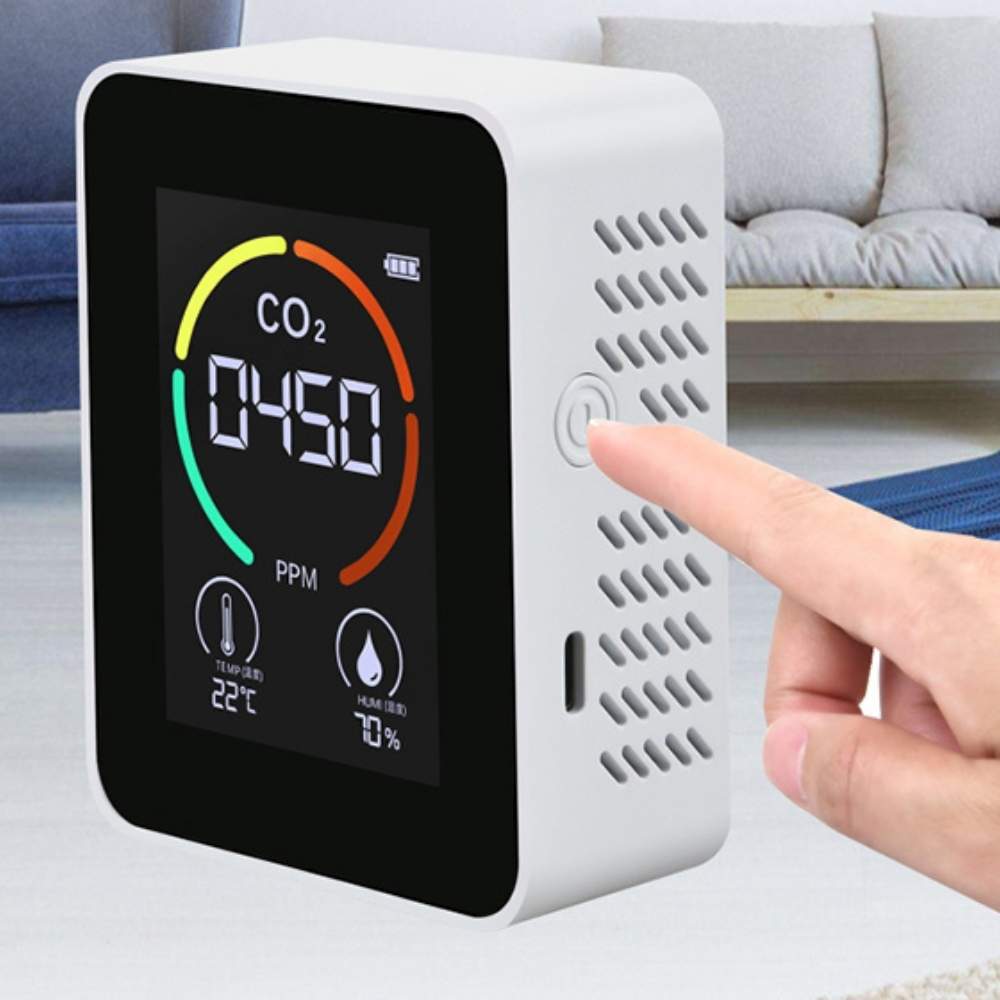
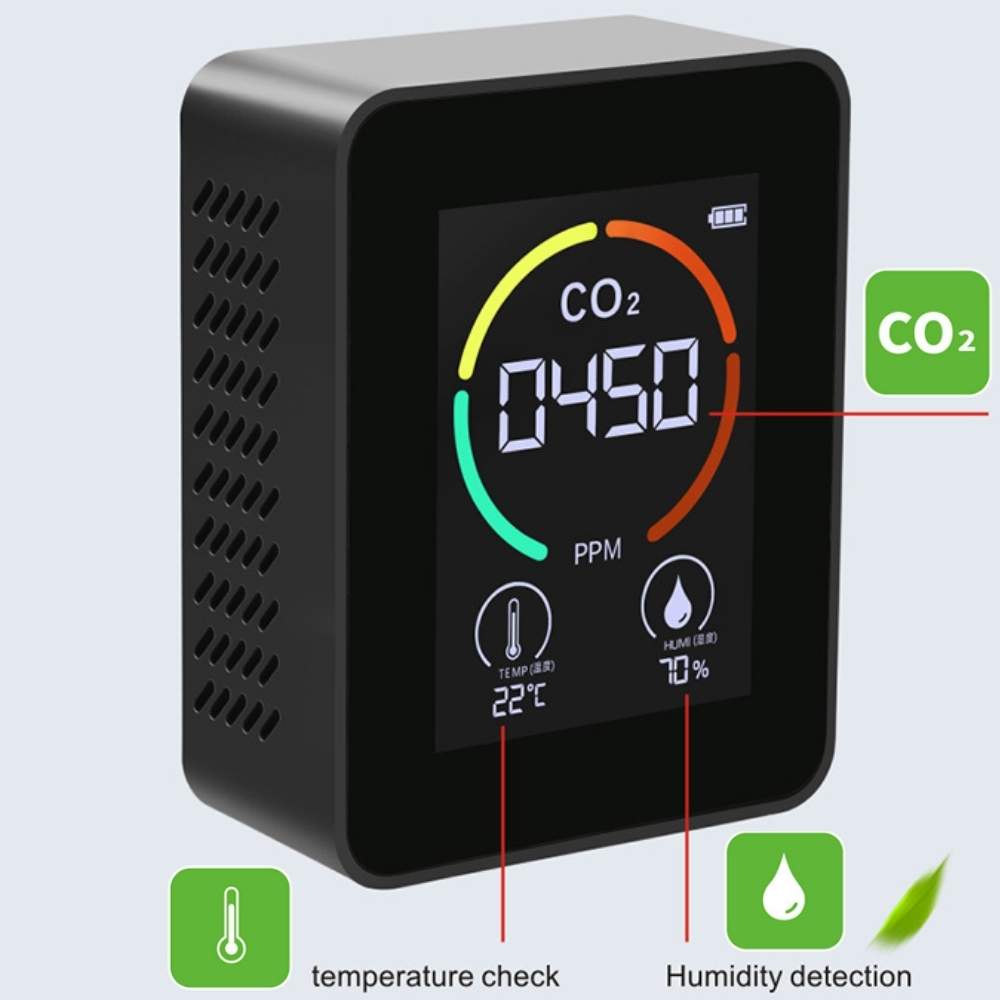
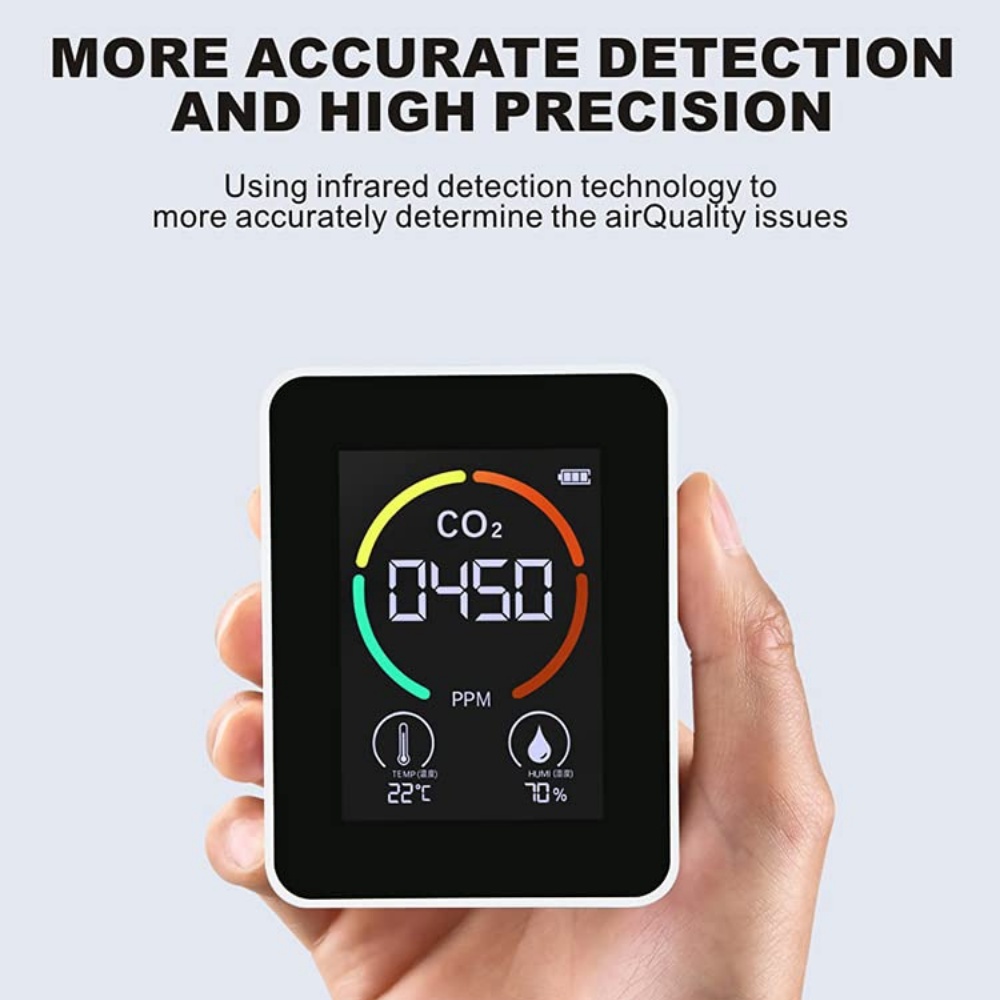
A carbon dioxide meter is a device equipped with sensors to detect the concentration of CO2 in the air. Once CO2 levels rise above a certain threshold, the CO2 measuring device will alert you, prompting you to increase ventilation or take other corrective measures. Many air quality monitors also track additional environmental factors like humidity and temperature, providing comprehensive data about your indoor conditions.
Choosing the Right CO2 Measuring Device
When selecting a CO2 measuring device, there are several factors to consider to ensure you’re choosing the best model for your needs:
- Accuracy: Look for a carbon dioxide meter that provides accurate readings, especially if you are using it in a space with high occupancy or limited ventilation. More accurate devices help ensure you are taking the right actions when necessary.
- Ease of Use: A user-friendly air quality monitor with a clear display is important for easy interpretation of the data. Choose a model that offers a straightforward interface with visible CO2 readings.
- Additional Features: Some CO2 measuring devices come with additional features such as logging data over time, tracking temperature, and providing connectivity options (such as Wi-Fi or Bluetooth) to monitor air quality remotely.
- Portability: If you need to monitor multiple spaces or are frequently moving between rooms, a portable carbon dioxide meter is a great option, allowing you to track air quality in different environments with ease.
How to Use an Air Quality Monitor Effectively
Using an air quality monitor efficiently can make a big difference in maintaining a safe and healthy environment. Here’s how to get the best results from your CO2 measuring device:
- Place the Monitor Correctly: For the most accurate readings, place your carbon dioxide meter in areas where people spend the most time, such as living rooms, bedrooms, or office spaces. Avoid placing it too close to doors, windows, or vents, as these areas may distort the readings.
- Calibrate Regularly: To maintain accuracy, calibrate your CO2 measuring device periodically according to the manufacturer’s instructions.
- Monitor Changes: Keep an eye on CO2 levels throughout the day, especially in rooms with high occupancy or limited ventilation. If CO2 levels rise, take steps to improve air circulation, such as opening windows or using fans.
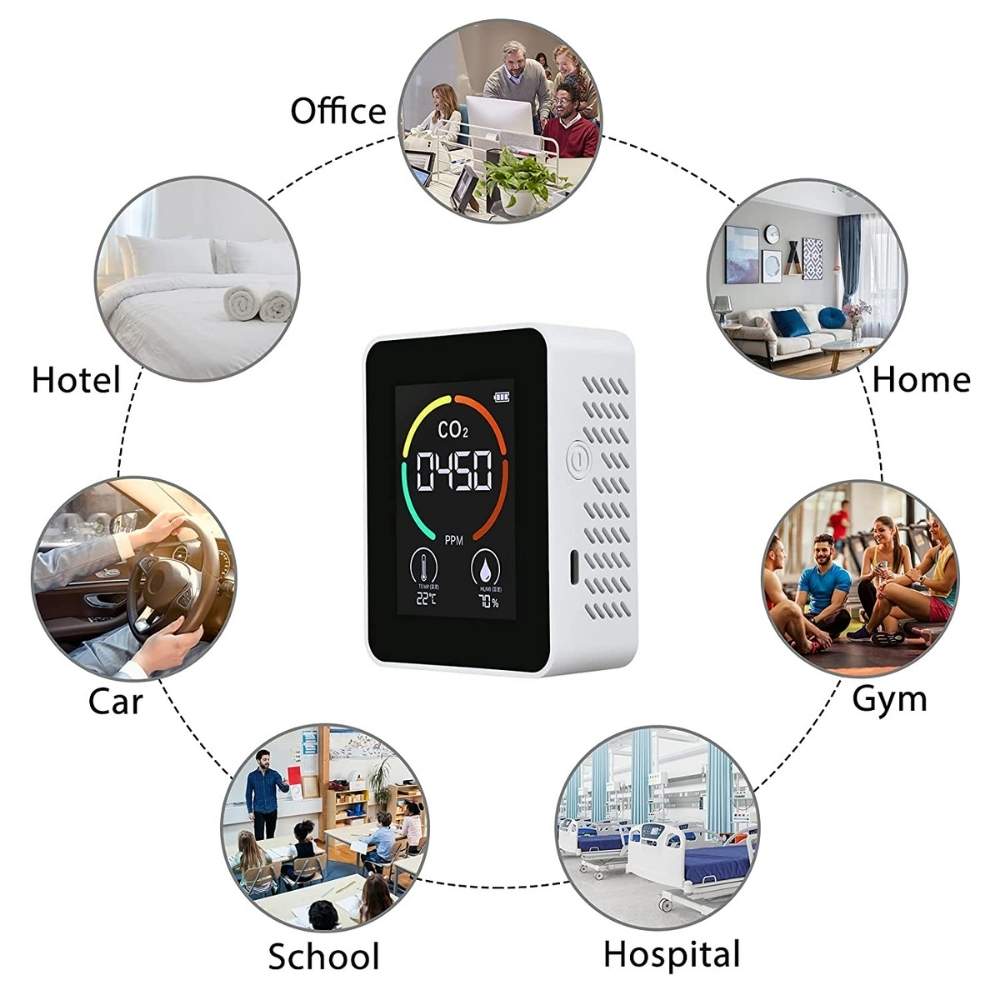
The Role of an Air Quality Monitor in Workplaces and Schools
CO2 can provide context about fresh-air ventilation in an occupied room. It does not detect viruses or establish infection risk. Use ventilation alongside the public health measures appropriate to the situation.
Conclusion: Ensure Healthy Air with a Carbon Dioxide Meter
CO2 can provide context about fresh-air ventilation in an occupied room. It does not detect viruses or establish infection risk. Use ventilation alongside the public health measures appropriate to the situation.
CO2 can provide context about fresh-air ventilation in an occupied room. It does not detect viruses or establish infection risk. Use ventilation alongside the public health measures appropriate to the situation.
How much does this air quality monitor weigh?
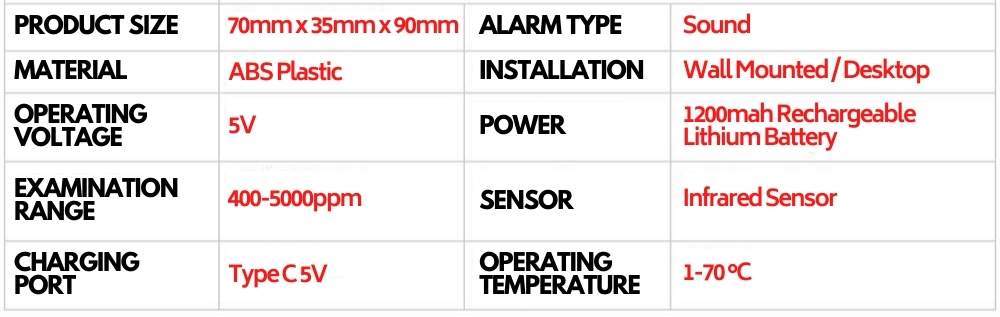
The weight of this air quality monitor is 108gm | 0.24lb, very light, easy to carry and fast to useCan this CO2 Meter be used and charged at the same time?
YES - this co2 monitor can be used and charged at the same time.
What is the range of CO2 concentration measured by this model air quality monitor?
This air quality monitor detection CO2 concentration range is 400-5000ppmWill this co2 monitor sound an alarm when the co2 concentration exceeds the standard?
YES IT WILL - if CO2 exceeds the standard, the device will sound an alarmCan this air quality monitor view all measurements at the same time?
Yes, this air quality monitor can detect both CO2 concentration as well as temperature and humidity values all at the same timeCan this air quality monitor be hung up?
Yes, there are slots on the back of this air quality monitor, so you can hang it up and use itHow long can the co2 detector be used after it is fully charged?
This co2 detector can be used for 20 hours after a full chargeCO2 can provide context about fresh-air ventilation in an occupied room. It does not detect viruses or establish infection risk. Use ventilation alongside the public health measures appropriate to the situation.
CO2 can provide context about fresh-air ventilation in an occupied room. It does not detect viruses or establish infection risk. Use ventilation alongside the public health measures appropriate to the situation.
Respiratory air from breathing and speaking accumulate in indoor spaces, much like cigarette smoke but invisible. Spending as little as 10 minutes in a poorly ventilated room is less of a risk than spending hours in there, so homes and workplaces are high risk.
CO2 can provide context about fresh-air ventilation in an occupied room. It does not detect viruses or establish infection risk. Use ventilation alongside the public health measures appropriate to the situation.
CO2 can provide context about fresh-air ventilation in an occupied room. It does not detect viruses or establish infection risk. Use ventilation alongside the public health measures appropriate to the situation.
- Venue: Multiple people indoors, where social distancing is often harder.
- Poor Ventilation: Staying in one place with limited fresh air.
- Vocalisation: Talking, shouting or singing will increase aerosolisation of the virus.
- Time: The amount of time spent in the venue in relation to the risk. Less time is better.
In order to mitigate these risks the following solutions are advised:
CO2 can provide context about fresh-air ventilation in an occupied room. It does not detect viruses or establish infection risk. Use ventilation alongside the public health measures appropriate to the situation.
Consult current guidance for the building and use the readings as one part of a ventilation assessment.
Improve conditions using air purifying devices. At a minimum, these should have a HEPA filter and the size of the unit should be matched to the space. Alternatively, relocate activities outside or to a better-ventilated venue.
CO2 can provide context about fresh-air ventilation in an occupied room. It does not detect viruses or establish infection risk. Use ventilation alongside the public health measures appropriate to the situation.
This is a carbon dioxide (CO2), temperature and humidity monitor. It is not a carbon monoxide (CO) alarm, smoke alarm, oxygen monitor or virus detector. A reading cannot prove that air is safe.
Follow the supplied instructions and current guidance from the relevant Singapore authorities.